Total Knee Replacement
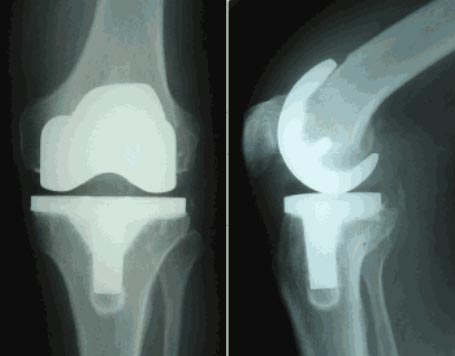
Total knee replacement surgery removes damaged cartilage and bone surfaces caused by osteoarthritis and replaces them with low-friction artificial joint surfaces.
What the operation replaces
The surfaces of the bones that form the knee joint – the thighbone, the shinbone and the knee cap - are replaced with smooth non-corrosive metal and high-density polyethylene plastic to provide low-friction artificial joint surfaces necessary for good functioning of the knee.
Frequently Asked Questions
When should knee replacement be considered?
Total knee replacement may be considered when advanced knee arthritis causes persistent pain, stiffness, deformity, walking difficulty, sleep disturbance, or loss of activities of daily living despite reasonable non-surgical treatment.
How long should I wait after a cortisone injection before knee replacement?
If a corticosteroid, or cortisone, injection was placed into the knee that is going to be replaced, elective knee replacement is generally delayed at least 3 months from the injection date. The strongest evidence of increased periprosthetic joint infection risk is when knee replacement is performed within 3 months after an injection into the same joint.
Please tell us the exact date, joint injected, and medication used. If knee replacement is likely soon, do not have another steroid injection into that knee without discussing timing. See the Injection Therapy safety page and this systematic review on knee replacement timing.
How long will I stay in hospital?
About half of patients go home the same day after total knee replacement. The others usually stay overnight, most often because of medical monitoring, pain control, dizziness, nausea, late surgery time, or home support concerns.
How long is rehabilitation?
Total knee replacement recovery is usually a 3 to 4 month process. Swelling, warmth, stiffness, strength, balance, and confidence can continue to improve for 12 months or longer.
When can I drive after knee replacement?
Most patients should not drive until they are off narcotic pain medication, can get in and out of the car safely, have enough knee motion and leg strength to control the vehicle, and can perform an emergency stop.
Research on braking after knee replacement is variable, but 4 to 6 weeks is a common range and about 6 weeks is a cautious general guideline, especially after a right knee replacement. The timing should be individualized based on the side of surgery, vehicle type, pain, walking aids, confidence, and overall recovery.
Do I need antibiotics before dental procedures after knee replacement?
For most patients with a knee replacement, routine antibiotics before dental procedures are not recommended solely to protect the artificial joint. The Canadian consensus statement from the Canadian Orthopaedic Association, Canadian Dental Association, and AMMI Canada, the American Dental Association guideline, and the 2024 AAOS/AAHKS guideline do not support routine antibiotic prophylaxis for most patients.
Good oral hygiene and prompt treatment of dental infection are important. Patients with previous joint infection, major complications, significant immune suppression, poorly controlled diabetes, or other special risk factors should discuss their situation with their dentist and surgeon before invasive dental work. Some patients may need antibiotics for other medical reasons, such as certain heart conditions, which should be decided by the dentist or physician managing that condition.
Can both knees be replaced at the same time?
In selected patients with significant arthritis in both knees, bilateral total knee replacement can be considered. The early recovery is more demanding and the hospital stay is usually longer, but it avoids going through two separate operations and recoveries.
How long does a knee replacement last?
Modern knee replacements often last for decades, but longevity varies. Implant survival depends on factors such as age, activity level, weight, bone quality, implant fixation, alignment, infection risk, injury, and general health.
Can I return to sports after knee replacement?
Many patients return to recreational sports after total knee replacement, especially low-impact activities such as walking, cycling, swimming, golf, easy hiking, and supervised gym exercise.
Intermediate-impact activities usually involve more force, uneven ground, or some twisting, such as doubles tennis, pickleball, skating, cross-country skiing, downhill skiing on groomed runs, or more demanding hiking. High-impact activities include running, jumping sports, singles tennis, basketball, soccer, hockey, football, rugby, squash, racquetball, martial arts, and high-impact aerobics.
A recent review of return to sport after hip and knee arthroplasty supports a three-tiered approach: low-impact sports are generally recommended, intermediate-impact sports may be reasonable for experienced patients, and high-impact sports are generally not recommended without individualized discussion. A 2023 systematic review and meta-analysis found that many patients can return to sport after knee replacement, but return depends on preoperative activity, recovery of strength and balance, pain, swelling, implant factors, and general health.